
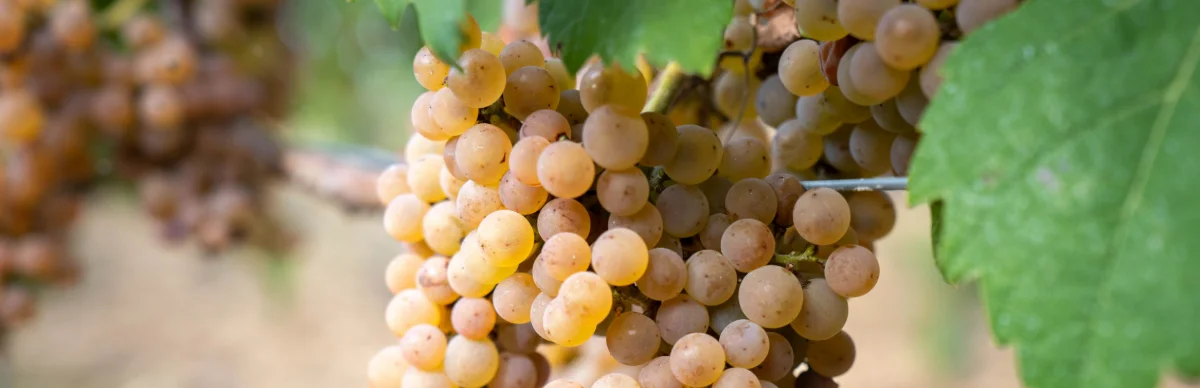

Calardis Blanc and GRN: two genetic innovations for the bubbles of tomorrow

Published on November 20, 2025

Since 2018, Novatech has been selecting and developing new genetic resources to address the challenges facing modern viticulture. Among these innovations, two promising developments are currently attracting the attention of Champagne winegrowers: Calardis Blanc, a resistant grape variety suitable for sparkling wine production, and the GRN 1 and GRN 3 rootstocks, which are resistant to the nematodes that transmit fanleaf degeneration.

Calardis Blanc: a naturally resistant variety

Developed through natural breeding by the Julius Kühn Institute in Germany, Calardis Blanc has just been approved by the CTPS (Permanent Technical Committee for Plant Breeding). Submitted for registration in France by Novatech, this variety combines excellent resistance to downy and powdery mildew with remarkable oenological qualities for sparkling wine production.

Developed through natural breeding by the Julius Kühn Institute in Germany, Calardis Blanc has just been approved by the CTPS (Permanent Technical Committee for Plant Breeding). Submitted for registration in France by Novatech, this variety combines excellent resistance to downy and powdery mildew with remarkable oenological qualities for sparkling wine production.

In 2021, Novatech launched a trial program to evaluate the variety's potential in temperate climates and under real-world production conditions. Initial winemaking trials confirm its suitability for producing base wines that are lively, balanced, and possess good natural acidity—key assets for meeting the expectations of Champagne houses and winegrowers committed to reducing the use of phytosanitary inputs. The plant material will soon be available through Mercier nurseries under the NATHY brand.

GRN: a genetic solution to fanleaf degeneration

Another strategic innovation to watch closely is the introduction of the GRN 1 and GRN 3 rootstocks, developed through natural breeding by UC Davis in California under the direction of Prof. Andy Walker. These rootstocks have proven effective in the United States against several nematode species, including *Xiphinema index*, the primary vector of the fanleaf degeneration virus. Since 2021, Mercier has been conducting trials in France to evaluate their performance under local conditions—specifically their tolerance to active limestone (a key factor for soils in the Champagne region), vigor, grafting affinity, and agronomic behavior with various grape varieties. An initial trial plot was planted in Champagne in 2023. If the results are confirmed, these rootstocks could pave the way for limiting the impact of this devastating viral disease.

Conclusion

From resistant grape varieties designed for sparkling wine production to nematode-tolerant rootstocks, these two innovations share a common goal: offering concrete, robust, and sustainable solutions to the technical, economic, and environmental challenges facing Champagne and other sparkling wine-producing regions.

https://www.laboratoire-novatech.com/varietes-nathy.php