
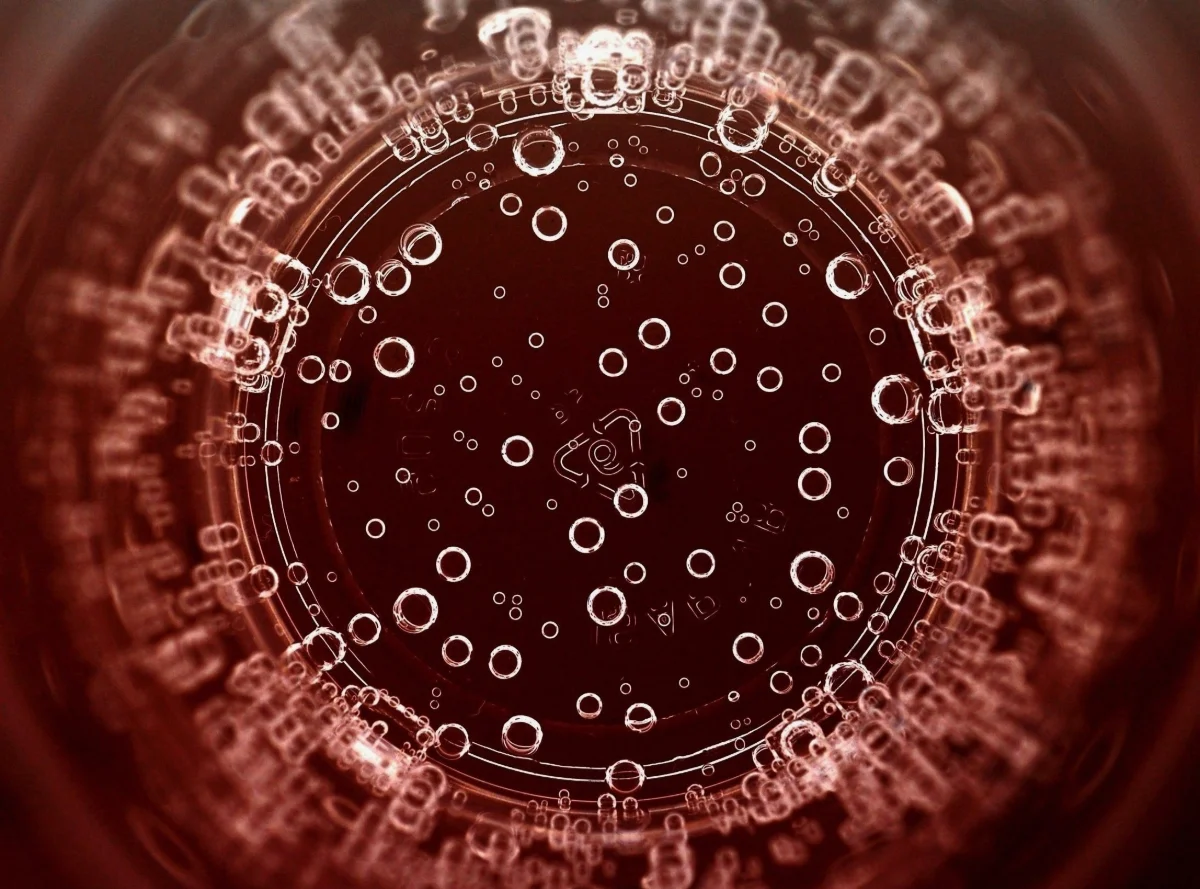
Gérard Liger-Belair, l’homme qui perce les mystères des bulles
À première vue, elles ne sont qu’un détail. Une colonne scintillante dans un verre, un frémissement presque hypnotique à la surface. Et pourtant, les bulles font toute la singularité du champagne. Depuis plus de vingt-cinq ans, le physicien Gérard Liger-Belair en a fait son terrain d’exploration scientifique, au point de devenir une référence mondiale sur le sujet.
Nous sommes heureux de pouvoir compter sur son expertise scientifique et ses conseils pour programmer des conférences de haut niveau pendant le Sparkling Wine Forum, dont la 4ème édition se tiendra à Reims le 19 mai prochain.
Une vocation née par hasard
« Je suis le premier surpris que ça dure depuis aussi longtemps », confie-t-il avec un sourire. À la fin des années 1990, il ne se destinait pas à une carrière autour du champagne. Il cherchait simplement un sujet de thèse en physicochimie.
Mais une autre passion s’invite dans l’équation : la photographie. Il commence alors à capturer, en gros plan, les bulles de boissons gazeuses. Pas pour la science, du moins pas encore. « Au départ, c’était purement esthétique. Je voulais voir comment se formaient les bulles, la mousse, ce qui se passait à la surface. »
Dans sa salle de bain transformée en laboratoire improvisé, il développe ses clichés argentiques. Des mois durant, il accumule les images. Jusqu’au moment où il décide de donner une dimension scientifique à cette fascination visuelle. Il envoie ses travaux à plusieurs grandes entreprises, dont Moët & Chandon et Coca-Cola.
Seule la maison champenoise répond. Intriguée, elle l’invite à Épernay en 1997. Surprise : malgré leur expertise, personne n’y a réellement étudié la formation des bulles. Sur leur recommandation, Gérard Liger-Belair entame une thèse à l’Université de Reims en partenariat avec Moët & Chandon et le Champagne Pommery en 1998. « Je pensais travailler trois ans sur le sujet… mais il était totalement vierge. Chaque réponse ouvrait de nouvelles questions. »
Il n’en sortira jamais vraiment.

La bulle, entre esthétique et science
Si la bulle fascine autant, c’est qu’elle parle à tous. « On a tous fait des bulles étant enfants. On a tous bu des boissons gazeuses. Il y a quelque chose de profondément universel. »
Cette dimension presque instinctive du phénomène l’a conduit à croiser d’autres regards que celui du physicien. Lors de l’une de ses conférences, il rencontre le psychologue Édouard Zarifian, intrigué lui aussi par le pouvoir d’évocation des bulles. De cet échange naîtra une collaboration inattendue : les deux hommes coécriront l’ouvrage Bulles de Champagne, explorant à la fois les dimensions scientifique et sensible de l’effervescence.
Derrière cette apparente simplicité se cache pourtant une complexité physique remarquable. Longtemps, les scientifiques se sont intéressés aux mousses ou aux fluides, mais rarement aux bulles dans les boissons. Un angle mort que le chercheur va explorer en profondeur.
Et très vite, il comprend que ces bulles ne sont pas qu’un spectacle.
Une mécanique essentielle à la dégustation
Dans un verre de champagne, tout commence sur la paroi. Les bulles naissent sur des micro-aspérités — souvent des fibres invisibles laissées par un chiffon. Elles remontent ensuite en captant le dioxyde de carbone dissous, mais aussi des composés aromatiques.
À la surface, elles éclatent, libérant ces arômes dans l’air. « C’est ce qui structure progressivement le bouquet du vin. »
Le champagne devient alors une expérience sensorielle complète : visuelle, olfactive et gustative. Sans effervescence, il ne serait qu’un vin blanc parmi d’autres. Ses bulles lui confèrent un côté presque vivant et dynamique incomparable.
Le mythe des bulles fines
Dans l’imaginaire collectif, les bulles fines sont synonymes de qualité. Une idée que la science nuance fortement.
« En grande partie, c’est faux. » La taille des bulles dépend avant tout de la quantité de dioxyde de carbone dissous dans le vin. Or, cette quantité diminue avec le vieillissement.
Plus un champagne reste longtemps en cave, plus il s’appauvrit en CO₂… et plus ses bulles deviennent fines. « C’est donc davantage un indicateur d’âge que de qualité. »
Une conclusion qui bouscule certains codes, mais qui illustre parfaitement la réalité physicochimique du vin. « Qu’on le veuille ou non, derrière chaque dégustation de vins effervescents se cache un aspect purement scientifique. »

Le rôle décisif du verre et l’importance du geste
Autre idée reçue battue en brèche : l’effervescence ne dépend pas uniquement du vin, mais aussi du verre
Sans micro-impuretés, les bulles ne se formeraient presque pas. Des micro-lésions peuvent être créées en essuyant un verre à l’aide d’un torchon dont les fibres viendront tapisser les parois, aidant à la formation des bulles. Et la forme du verre joue un rôle déterminant dans la perception aromatique. « On a compris qu’il fallait plus de volume, plus d’espace pour que les arômes puissent se développer. »
Exit donc les flûtes étroites, longtemps emblématiques du champagne. Dans les établissements haut de gamme, elles ont été remplacées par des verres plus larges, proches de ceux utilisés pour les vins blancs.
Une petite révolution.
Le service, lui aussi, change tout. Au moment de verser, le champagne subit des turbulences qui entraînent une perte de CO₂. « Tout le gaz perdu à ce moment-là ne participera plus à l’effervescence. »
Pour limiter ce phénomène, une solution simple : incliner le verre, comme pour la bière. Ce geste, longtemps jugé hérétique dans un univers très codifié, s’impose aujourd’hui progressivement « on gagne plusieurs minutes d’effervescence dans le verre. »
Une science au service de toute une industrie
Les travaux de Gérard Liger-Belair ne se limitent pas au champagne. Très vite, d’autres industries s’y intéressent : eaux gazeuses, bières, sodas.
Il collabore notamment avec des marques comme Badoit, le groupe Diageo, ou encore Coca-Cola. Les questions restent les mêmes : peut-on moduler les bulles pour influencer l’expérience sensorielle ?
La réponse est oui. « Plus il y a de CO₂ dissous, plus les bulles seront nombreuses et grosses. C’est de la chimie, dans son sens le plus simple. »
Entre science et tradition
Introduire la rigueur scientifique dans un univers aussi culturel que celui du champagne n’a pas toujours été évident. « Au début, certains étaient inquiets de voir un physicien s’intéresser à leur métier. »
Il a fallu du temps, de la pédagogie, et parfois convaincre contre les habitudes. Mais les résultats ont fini par s’imposer. Notamment sur des cas concrets comme les vieux millésimes, particulièrement sensibles à la perte de CO₂, dont le service nécessite donc une attention particulière.
Aujourd’hui, la science et la tradition cohabitent plus sereinement.

Le Boom des vins effervescents
Depuis une vingtaine d'années, l'intérêt international pour les vins effervescents ne cesse de croître, poussé par la montée du Prosecco qui continue encore d'évoluer. Aujourd’hui les volumes de Prosecco ont été multipliés par quatre ou cinq en vingt ans grâce à leur aspect bon marché.
A l’heure actuelle la demande explose hors Champagne.« Toutes les zones du monde qui produisent des bouteilles de vins effervescents selon la méthode traditionnelle Champenoise ou d’autres méthodes s'intéressent à leurs bulles. »
Un marché qui attire même l’industrie des boissons gazeuses dont Coca-Cola qui sollicite l’analyse et l’expertise de Gérard Liger-Belair sur la science des bulles.
Des découvertes visuelles sans fin
Une dizaine d'années auparavant, Gérard Liger-Belair et son équipe se sont intéressés au bouchon de champagne qui saute, expérience visuelle ancrée dans l’imaginaire collectif.
« Au moment du débouchage, vous avez un processus scientifique qui permet au gaz de se condenser et prendre des formes absolument incroyables.»
Prouvant que ce sujet continue d’offrir de belles choses à voir.
Les émotions véhiculées par les bulles
«Je suis une personne très visuelle et ce qui m’émerveille toujours est cet aspect visuel et esthétique de la bulle». Au début de son parcours Gérard Liger-Belair ne possédait pas les ressources lui permettant de photographier le moment exact où la bulle éclate. Maintenant qu’il possède les outils nécessaires, ce spectacle représente un instant de beauté pure à ses yeux. « Il n’y a même pas besoin d’être scientifique pour ressentir une émotion face à ces images époustouflantes. »
Il réalise de nombreuses expositions photographiques et selon lui, ce côté plus artistique de la bulle permet de toucher plus de monde en dehors de la communauté scientifique. « C’est une imagerie du champagne et des boissons gazeuses qui est totalement phénoménale, c’est là que je ressens mes émotions les plus fortes. »

La fascination pour les bulles
« On a tous des souvenirs avec des bulles et dès lors qu’on commence à se rappeler de nos souvenirs d’enfance, on est touchés et émus. Par exemple, une dégustation de champagne, ça parle à l’enfant qui est en nous. »
Quand il était enfant, Gérard Liger-Belair confie que lorsqu’il voyait ses parents consommer des vins, les vins tranquilles le désintéressaient totalement tandis que les vins effervescents réveillaient chez lui une véritable curiosité.
Le mystère persiste
Malgré des décennies de recherche, tout n’est pas encore expliqué. Les interactions fines entre bulles, arômes et perception sensorielle restent en partie mystérieuses.
Et c’est peut-être ce qui rend le sujet si fascinant. Car au fond, la bulle dépasse la seule physique. Elle touche à l’émotion, à la mémoire, à une forme de poésie universelle.
« La science peut expliquer beaucoup de choses, conclut-il. Mais il restera toujours une part de mystère tant les processus à l'œuvre sont complexes et subtils. »
Le rôle du Sparkling Wine Forum pour la communauté scientifique
Pour Gérard Liger-Bélair, membre du comité scientifique du Sparkling Wine Forum 2026, il est essentiel qu’un événement permettant la discussion sur les avancées et les problématiques scientifiques autour de la filière viticole prenne place en Champagne.
« Il me semble qu’il existe encore, dans ce milieu, une certaine frilosité qui limite trop souvent le discours aux seuls vins de Champagne, alors qu’il y aurait au contraire de quoi se réjouir et être fier de voir ce savoir-faire exploré et adopté à travers le monde. »
« C’est un forum qui faisait cruellement défaut en Champagne : lorsque je suis arrivé dans la région au début des années 2000, j’ai été surpris qu’il n’existe pas encore d’événement majeur consacré à la bulle, à la croisée du monde scientifique et professionnel, et capable de rayonner à l’international. »
Gérard Liger-Belair explique le rôle précieux de la recherche, encore plus en période de crise pour la filière qui doit se tourner vers l’innovation scientifique afin de survivre à chaque crise. D'après lui, la recherche et le développement sont des piliers majeurs en cas de perturbations, cependant ces branches souffrent de coupes budgétaires lors de chaque crise.
D’où l’importance d’un forum de ce type, qui permet de valoriser les travaux des scientifiques du monde vitivinicole, en favorisant les rencontres et les échanges autour de leurs innovations et de leurs problématiques de recherche.
« C’est un monde extraordinaire qui ne cesse d’évoluer et de se renouveler. N'oublions jamais que le monde des idées n’a pas d’AOC, et que nous avons tous beaucoup à apprendre les uns des autres. » conclut Gérard Liger-Belair