

Sparkling News is an initiative of EFFEVENT | SAS with a share capital of 140 000 € | RCS of REIMS 878 975 549
Riddling, tradition and innovation - The perspective of SOEC, Sofralab's Champagne agency
The perspective of SOEC, Sofralab's Champagne agency
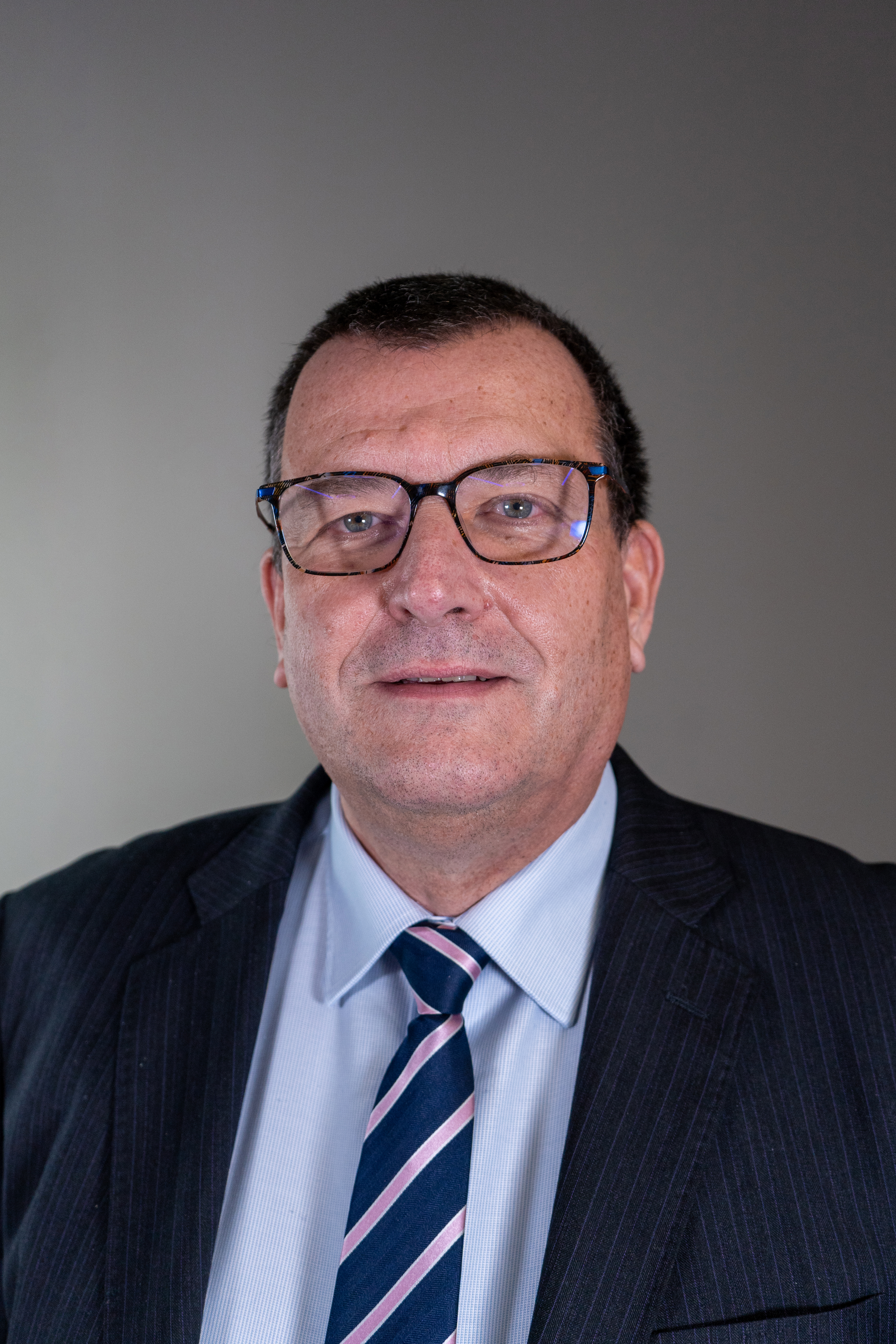
Exclusive interview with Nicolas François, Champagne Director,
Champagne Oenotechnical Station – Sofralab Group
Behind the scenes in Champagne, beyond the labels and illustrious houses, there are discreet but indispensable players who ensure that every bottle reaches perfection. The Champagne Oenotechnical Station (SOEC), the Champagne branch of the Sofralab group, is one such player. Since 1971, it has been supporting the industry with its unique expertise, entirely dedicated to sparkling wines. With the Sparkling Wine Forum 2026 approaching, we met with Nicolas François, Champagne Director at SOEC, to better understand his mission, the challenges that shape his daily life and his outlook on the future of sparkling wine.
Riddling. A lock that cannot be bypassed.
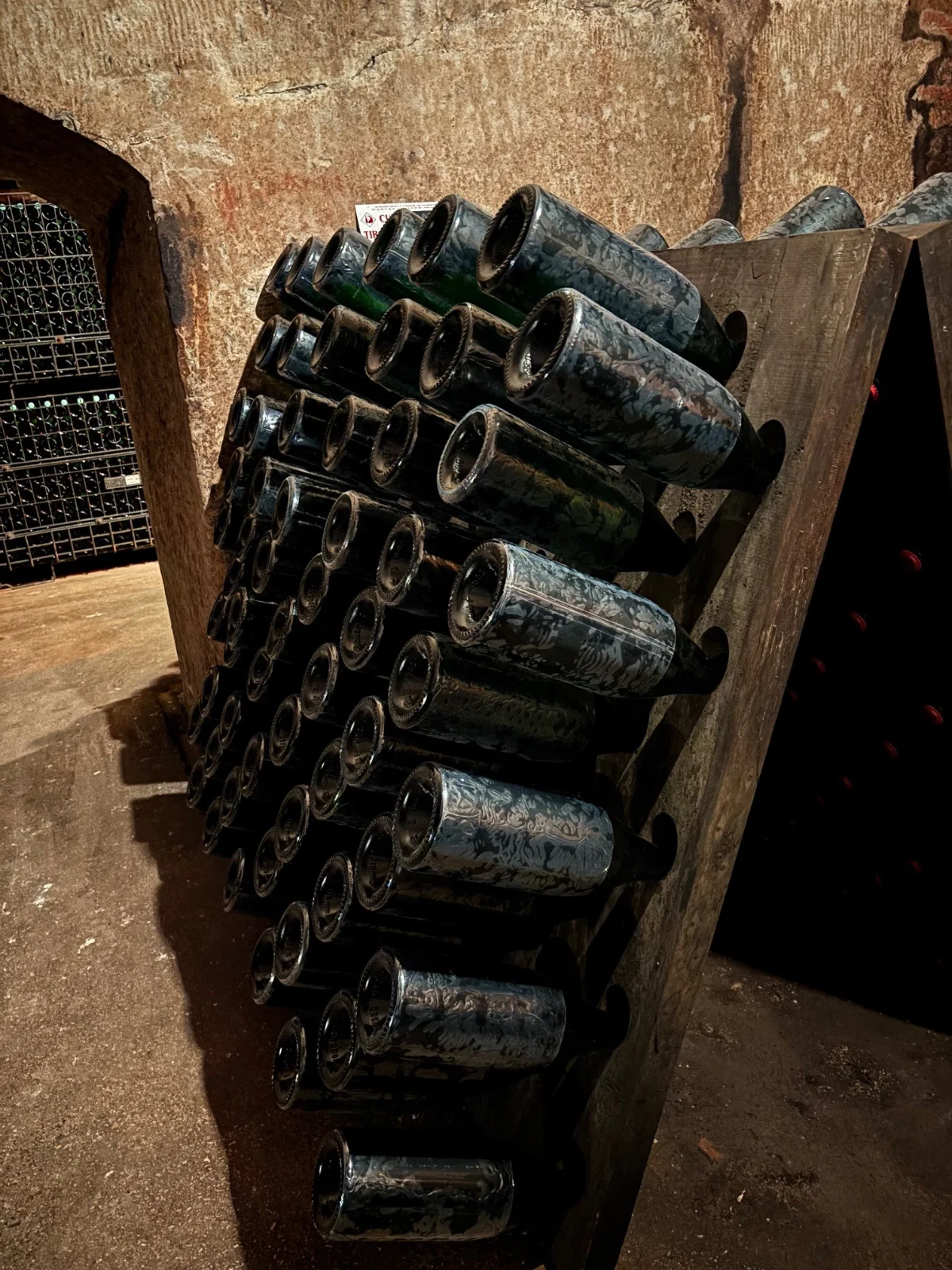
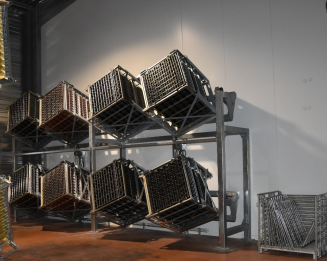
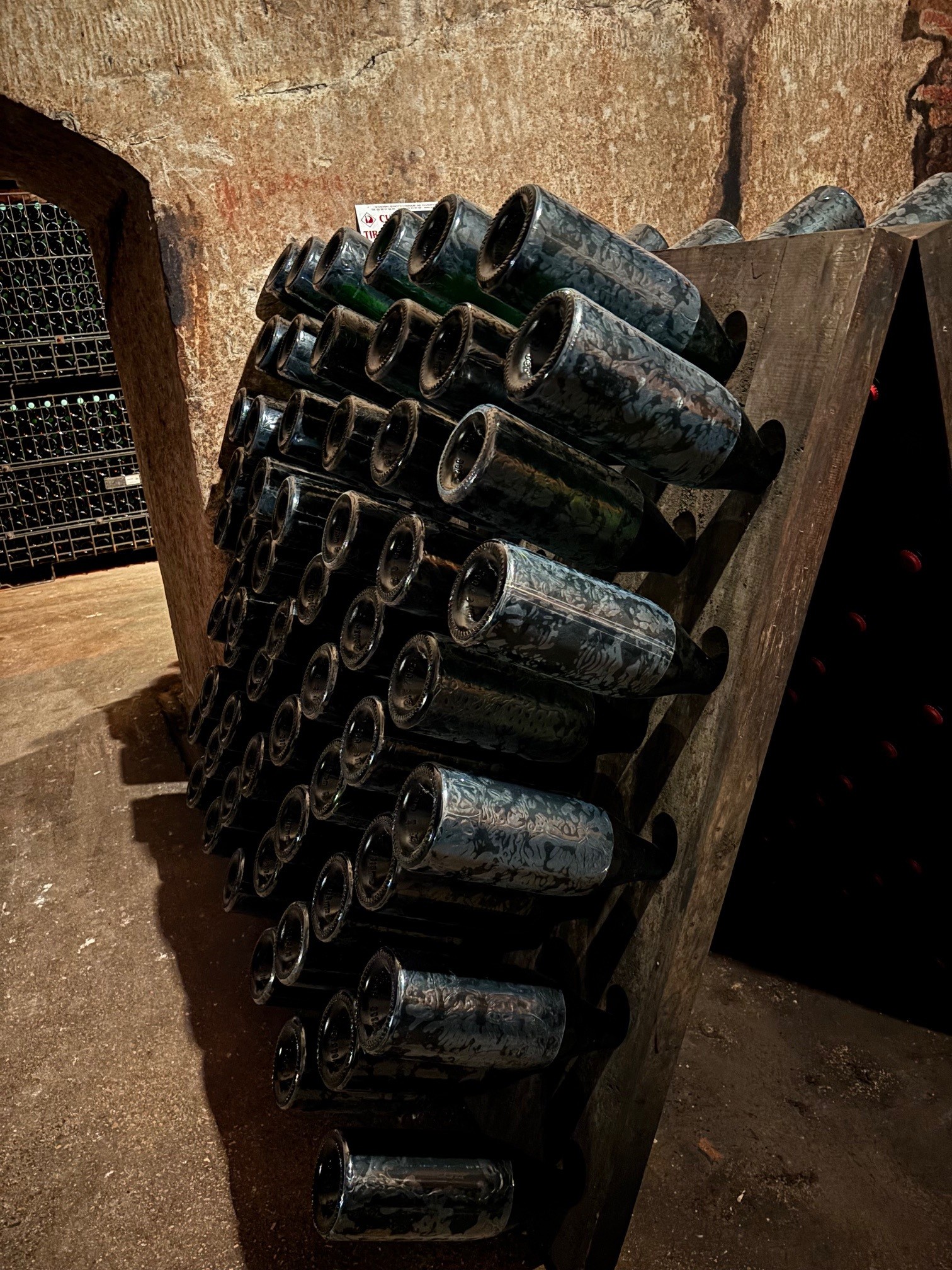
If we had to sum up what makes Champagne truly unique in one word, it would undoubtedly be remuage. The people of Champagne did not invent sparkling wine, but they did perfect bottle fermentation and, above all, remuage and disgorging — unique skills that are inseparable from Champagne. Even today, gyropalettes and disgorging chains are designed and purchased here, and nowhere else.
Riddling remains a major bottleneck in terms of capacity prior to marketing. It is impossible to sell an unriddled bottle: without sufficient capacity, orders are put on hold. Long carried out over a week, the process has been accelerated to four or five days in Champagne and two days in Crémant, under constant pressure to go ever faster. Added to this demand for speed is the demand for visual perfection: white bottles, prized for their marketing impact, reveal the slightest deposits, while certain shapes complicate the behaviour of the lees. Paradoxically, the Champagne bottle remains the most technically advanced.
In this already tense context, climate change is acting as an aggravating factor. Rising pH levels, increased calcium and the proliferation of unstable proteins, pectins and glucans complicate vinification and riddling. Added to this is increased microbiological pressure, favoured by warmer musts and early harvests, with the emergence of undesirable organisms such as Brettanomyces. At the same time, changes in practices – lower SO₂ levels, less fining and filtration, changes in cultivation methods – are profoundly altering the nature of wines, which no longer resemble those of thirty years ago.
The recent contraction of the market has exacerbated these challenges. The decline in sales volumes has led to longer ageing periods on slats, sometimes well beyond the initially planned durations, exposing wines to risks of oxidation and variations in style. In the face of these changes, oenological innovation has become an essential lever for preserving the excellence of champagne. New fining and microbiological control solutions, rational reduction of SO₂, protection of freshness: these are just some of the avenues being explored thanks to research largely funded by private sources. This serves as a reminder that, in a high-end product such as champagne, "the difference is often in the details" and that the traditional method remains a living balance, constantly adapting.
More complex wines. More unpredictable deposits.
Today's matrices are more complex than ever before. Unstable proteins, pectins, glucans, haze and residual particles create less predictable deposit behaviour. Less fining and filtration means less control upstream — and therefore more uncertainty at the time of riddling. And behind this evolution lies a fundamental misunderstanding about the role of proteins in effervescence. "For years, it was said that proteins were what you needed to make sparkling wine. That's true — but it's stable proteins that play this role. Unstable proteins have absolutely no effect on the effervescence of wines," explains Nicolas François. Former cellar masters systematically treated wines with bentonite, without necessarily knowing why. Today, we know why — but we no longer do it, without measuring the consequences on riddling.
It is therefore imperative to define operational quality thresholds that are consistent with the traditional method, without falling into inappropriate "zero tolerance" measures that paralyse production. "What level of riddling quality do you want? How far do you want to go? Otherwise, use closed tanks, it will be much more practical," he tells his customers, with a touch of humour that hides a serious message.
A fading skill. A revival of research and development.
Another issue, even more structural, concerns the transmission of know-how. In the past, the "chief stirrer" was a figure of authority. "He was a state within a state," recalls Nicolas François: "When the cellar master wanted to go down to the cellar, he had to ask the chief stirrer for permission. " Every morning, the remueur would examine his wines — by candlelight — and decide on any adjustments: an eighth of a turn, a sixteenth, to the left, to the right. He would even scrape the bottles against the wood of the rack to make them vibrate, in order to better remove the yeast. All of this has been completely lost today.
The widespread automation of riddling has considerably reduced direct observation of the behaviour of wines. "If you go into a Champagne cellar, everything is automated. The bottles are no longer touched from tirage to disgorging." And in oenology courses, training in riddling is virtually non-existent. "I challenge you to find me a young oenologist who has just left university and knows about riddling," says Nicolas François. In Crémant, the situation is even more striking: the large cellars built twenty or twenty-five years ago have no tradition of riddling.
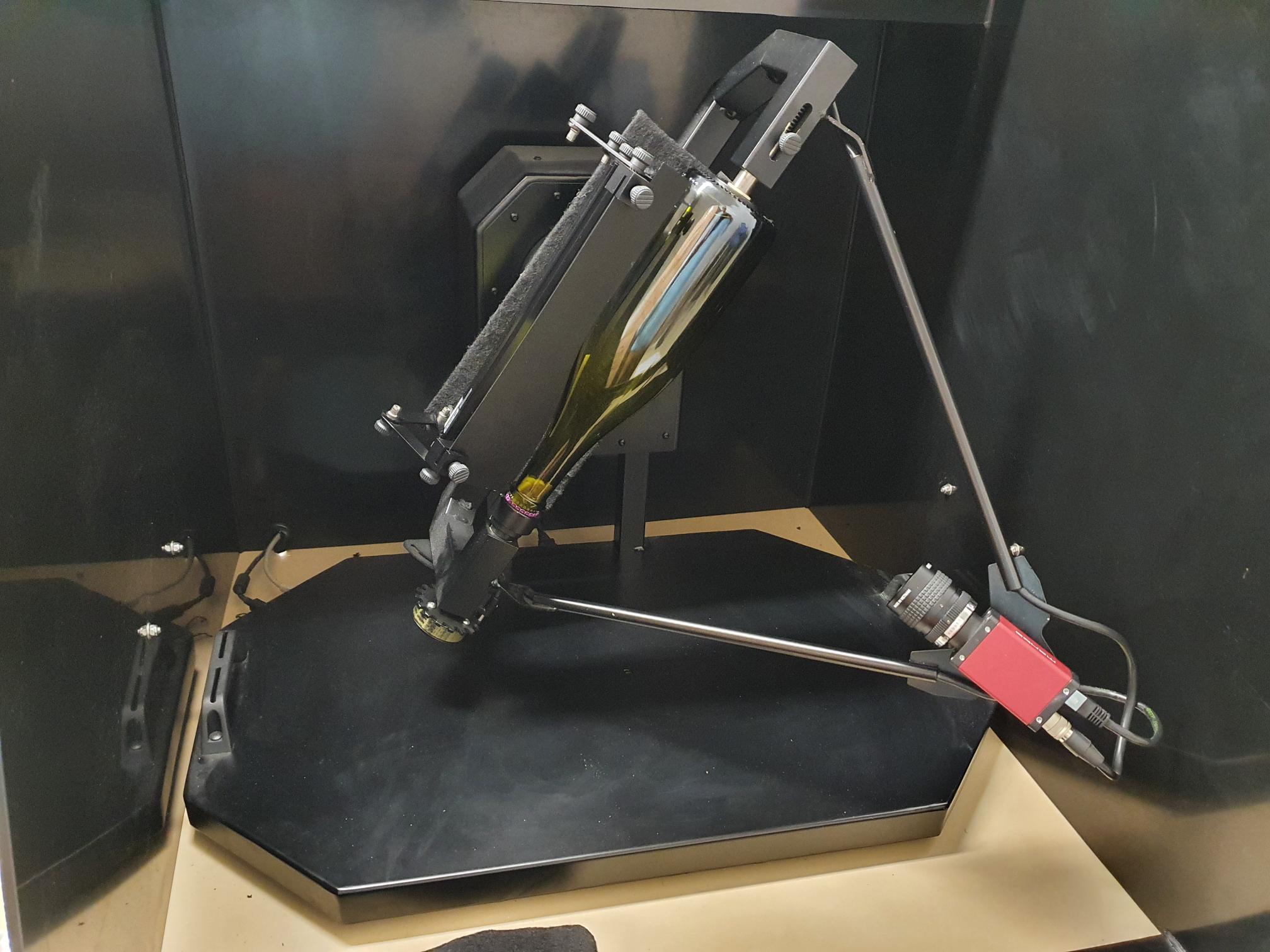
To address these challenges, the SOEC relaunched a structured research and development programme on riddling several years ago. It aims to develop new additives and study the impact of wine matrices – pH, calcium, colloids, microbiology – on the kinetics and cleanliness of riddling. A key tool accompanies this research: the Remulab, developed by OenoConcept, which allows the behaviour of deposits to be filmed and analysed in detail. "It's a tool you have to learn to use," says Nicolas François. Data compilation is ongoing, but the contributions are already significant. "We're starting to see some interesting results, we're starting to see a little more clearly. "
The approach recommended by the SOEC is to think about riddling from the moment of harvest, not just at the time of tirage. This means reducing unstable proteins, pectins and glucans upstream, controlling the microbial load – particularly in tirage fermentations – and adapting fining and clarification according to riddling objectives. "An oxidised wine is finished. There's no going back. If it's reduced, no problem, you can intervene," says Nicolas François. It's a philosophy of anticipation rather than correction.
Reims, 19 May 2026. The bubble speaks.
On 19 May 2026, in Reims — more precisely in Bezannes, at the Village by CA — the next edition of the Sparkling Wine Forum will be held, and the SOEC will be taking part. "What can we say about riddling in twenty minutes? A lot and not much at the same time," says Nicolas François with a smile. The proposed theme could be "Factors in wine that influence riddling". Other angles are also being discussed internally: the history of riddling, the transition from riddling racks to mechanisation, acceleration versus quality, or the focus on unstable proteins, pectins and glucans. There is even an idea around aluminium linked to bentonite — a subject the SOEC is currently working on.
The interest in this Forum is considerable. "When you meet people from different backgrounds, different regions, with different issues, it can click," says Nicolas François. And he knows what he's talking about: Sofralab operates in 75 countries. Just before Christmas, he hosted a group from Sicily for a three-hour presentation on riddling. "They told me: riddling is really a Champagne thing. We need the support of the Champagne region." And it's not just the Mediterranean: Nicolas is currently working on riddling advice for American wines — including those from Texas.
The SOEC also wants to explore the economic and regulatory aspects in greater depth. "Sparkling wines are insignificant on the world stage," Nicolas François points out: France, Italy and Spain together account for some 80% of global production. And the difference between sparkling and semi-sparkling wines remains poorly understood. The status of "Crémant" appellations outside France—particularly in Wallonia—and post-Brexit issues for the United Kingdom are also in the spotlight. "Everyone is a bit stuck in their own appellation. Seeing what's happening elsewhere is really something we're looking forward to."
Long live diversity in the bubble.
In the short and medium term, SOEC's ambition is clear: to weather the current crisis and emerge stronger, while maintaining the momentum of innovation and service within the traditional method sector. Its strategic positioning is that of a key player — one that devotes its entire brand to effervescence.
On a technical and scientific level, Nicolas François prefers humility to speculation. "Forty years ago, I was convinced that we would no longer be talking about riddling in the 2020s – because of closed systems and alternatives. Well, riddling is more relevant than ever. I wouldn't presume to know what will happen in 40 years' time. "What is clear, however, is the trend towards wines with lower alcohol content – around 7 to 8 degrees – for societal reasons. The SOEC is working internally on these issues, with one person dedicated almost full-time to the subject of "no/low alcohol". One concrete avenue is emerging: 'hybrid' blends, combining a wine with 12-13% ABV and a dealcoholised wine to obtain products with around 6-7% ABV. "It's a vast subject," he admits.
And to conclude, Nicolas François sends a message to the entire industry – one of diversity that is both claimed and celebrated. "Why compare a Crémant to a Champagne? You wouldn't compare a Bordeaux to a Burgundy." Each appellation has its own authenticity and specificity. "Long live diversity in sparkling wine," he concludes. In a world that often seeks to standardise, perhaps the most beautiful form of innovation is to remind ourselves of the value of each sparkling wine.
SOEC: over fifty years of innovation serving the effervescence industry
Behind these technical challenges and innovation dynamics lies a key player: SOEC – Station Œnotechnique de Champagne. More than just an independent entity, SOEC is the Champagne-based agency of the Sofralab group, whose mission is to design, manufacture and distribute oenological products. The SOEC is above all a benchmark brand, and the only one in the world exclusively dedicated to effervescence, using all methods – from the traditional method to closed tanks.
Founded in 1971 by the Association d'Œnologues, with Georges Hardy and Mr Martin, SOEC has been built from the outset on a culture of innovation closely linked to the needs of the industry. Georges Hardy is notably the inventor of the gyropalette, the tool that laid the foundations for modern riddling, without which Champagne would undoubtedly not have experienced the same development. This momentum continued with the creation of a complete range of riddling additives and associated programmes, positioning SOEC as a pioneer in the sector for the long term.
Today, SOEC has three strategic locations — Magenta, Cormontreuil and Bar-sur-Seine — covering the entire Champagne vineyard. Each site has its own laboratory, ensuring proximity, responsiveness and local expertise. Its solutions are now distributed in 75 countries, reflecting the universality of sparkling wines and the influence of its expertise far beyond Champagne.
Working alongside the industry, SOEC tailors its support to each individual profile. With the major houses, exchanges are targeted and ad hoc, focusing on innovation, experimentation and anticipating market expectations. With winegrowers, support is more continuous, from harvest to disgorging, incorporating technical advice, bottling and disgorging services, blending and liqueur production. This tailor-made approach makes SOEC a hands-on partner at the heart of the current transformations in the sparkling wine industry.
