
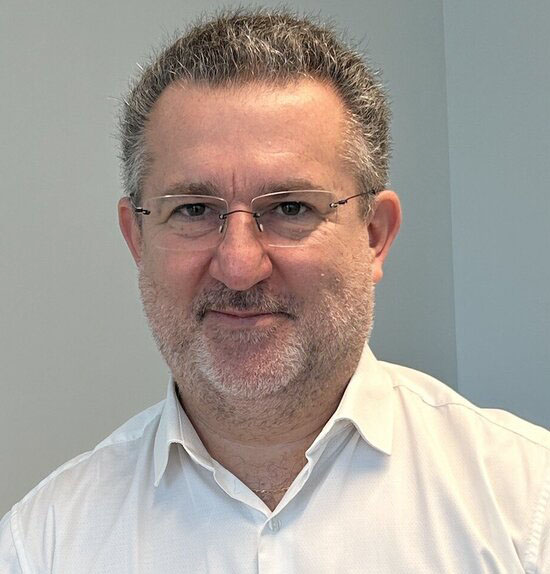
Olivier DUPERON: at the heart of the Georges Chappaz Institute, driving effervescent innovation
An Interdisciplinary and Collaborative Approach
The Georges Chappaz Institute values its research strengths through joint initiatives, such as its participation in the Sparkling Wine Forum last April. For the first time, thanks to the invitation from EFFEVENT and in collaboration with the InnoRem University Innovation Hub, the institute organized the first VITeff Meet & Match, an unprecedented speed-meeting connecting researchers and exhibiting companies. This initiative facilitated direct exchanges with socio-economic stakeholders and enabled the emergence of new research and innovation projects. Building on this success, the Georges Chappaz Institute and EFFEVENT will work together to strengthen and deepen this event in future editions, creating even more synergies between academia and industry professionals. Continuing this momentum, in 2026, the institute will highlight the results of university researchers’ work through a new initiative, “Bacchus Corpus.”
Professor of public law, Olivier DUPÉRON has left his mark on the University of Reims Champagne-Ardenne as dean of the Faculty of Law and Political Science and then as vice-president of its Board of Directors. He is now head of the Master’s program in Local Government Law and, since July 2024, as president of the Georges Chappaz Institute for Vine and Wine in Champagne, he combines legal expertise with a commitment to the wine sector.
"Champagne has always known how to reinvent itself collectively. The Georges Chappaz Institute must be a lever to anticipate the sector’s challenges, whether environmental, economic, or societal. We must listen to professionals, but also offer them concrete ways to innovate and succeed together in the transitions" – Olivier DUPÉRON
Following the Legacy of Georges Chappaz, Committed to Knowledge Transfer and Innovation
The Georges Chappaz Institute for Vine and Wine in Champagne, affiliated with the University of Reims Champagne-Ardenne (URCA), continues the legacy of Georges Chappaz, a pioneer of modern viticulture and a unifying figure in the Champagne sector. Today, this federative structure serves as an essential bridge between academic research, education, and the practical needs of professionals in viticulture, winemaking, and related industries. Its work is based on a multidisciplinary approach, mobilizing cutting-edge laboratories and diverse expertise to meet Champagne’s current and future challenges. Vanessa FENEUIL has been leading the institute since January 2025, supported by a team of four people, soon to be five, to support the development of apprenticeships and continuing education.
Research Strengths and Expertise Supporting the Sparkling Wine Sector and Its Related Industries
The University of Reims Champagne-Ardenne hosts nearly 1,500 researchers across some thirty research units organized into four main areas: EXEBIO (Excellence in Sustainable Bioeconomy), Humanities and Social Sciences, Mathematics, Physics, Digital and Engineering Sciences, and Biology, Chemistry and Health.
Among the primary challenges addressed by the wine sector is the “Effervescence & Champagne” team of GSMA, led by Gérard LIGER-BELAIR, exploring the physics and chemistry of bubbles. GSMA is also globally recognized for its AEROLAB division, led by Lilian JOLY, specializing in greenhouse gas detection and modeling.
In viticulture, Florence FONTAINE leads the MALDIVE Chair (Vine Wood Diseases), linked to the RIBP laboratory (Induced Resistance and Plant Bioprotection, under contract with INRAE) and a plant production platform. The ICMR (Institute of Molecular Chemistry) also participates in key sector projects such as the STROM demonstrator of the VITILIENCE project and the development of bio-based materials.
To support companies in digital and industrial transitions, industry players can collaborate with researchers from CRESTIC (Center for Research in Information and Communication Sciences and Technologies) and LICIIS (Laboratory for Intensive Computing and Image for Simulation). They can also benefit from services offered by the regional computing center ROMEO, named after its supercomputer, one of the most powerful in the world. In materials and packaging, companies can rely on the Institute of Thermal, Mechanical, and Materials Sciences (ITheMM) and ESIReims.
At the intersection of sciences, GEGENA (Study Group on Geomaterials and Anthropized Environments) and its experts on Champagne cellars and hillsides, such as Gilles FRONTEAU and Nicolas BOLLOT, work alongside local stakeholders to preserve heritage amid climate change challenges. This issue is central to a forthcoming UNESCO Chair project with the Côteaux, Maisons, and Champagne Caves Mission, a World Heritage initiative.
Finally, in the field of humanities and social sciences, URCA is recognized for its Wine & Law program, led by Théodore GEROGOPOULOS (Center for Research in Law and Territory, CRDT), whose work is published in the JUS VINI journal. Alongside legal experts, CEREP (Center for Studies and Research on Employment and Professionalization) and CRIEG – REGARDS team (Interdisciplinary Research Center in Economics and Management) also contribute to understanding the economic and societal evolution of the sector.

